What is a flow valve and how does it work?
Flow valves play a crucial role in various industrial applications. These devices control the flow of liquids and gases in systems. According to a recent report by Research and Markets, the global flow control valves market is projected to reach $9.23 billion by 2027. This highlights their growing importance in sectors like oil and gas, water treatment, and pharmaceuticals.
Flow valves function by regulating fluid movement. They can be manual or automatic. The complexity of their design varies based on application demands. For instance, industries require high precision for operations that involve hazardous materials. However, not all flow valves perform optimally under all conditions. Regular maintenance and appropriate selection are vital for efficiency.
Many organizations overlook the importance of regular assessments of flow valves. This can lead to inefficiencies and increased operational costs. Users should continually evaluate their systems and consider innovative solutions for better performance. Ultimately, understanding how a flow valve works can significantly impact operational efficiency and safety.
Definition and Function of a Flow Valve
A flow valve is essential in controlling fluid movement in various systems. It regulates the amount and pressure of fluids, ensuring efficient operations. According to industry data, flow valves contribute to over 30% of energy savings in industrial processes when used effectively. Their importance stretches across sectors, from water supply systems to manufacturing.
The functionality of a flow valve depends on its design. These valves can be manual or automatic, adjusting flow rates as needed. Recent studies indicate that improper calibration can lead to inefficiencies. For example, a poorly set valve can increase energy consumption by as much as 15%. This highlights the necessity for regular maintenance.
Moreover, flow valves must adapt to various conditions. They handle different pressures and temperatures, making versatility crucial. However, not all valves perform as expected under every scenario. Organizations must continually assess their flow valves' performance to prevent costly downtime or operational failures. It's a reminder to prioritize training and awareness among staff regarding their function and maintenance needs.
Flow Valve Functionality Analysis
This bar chart illustrates the operation efficiency of different types of flow valves under specified conditions. The data showcases typical flow rates (in liters per minute) at varying pressure levels (in PSI).
How Flow Valves Control Fluid Movement
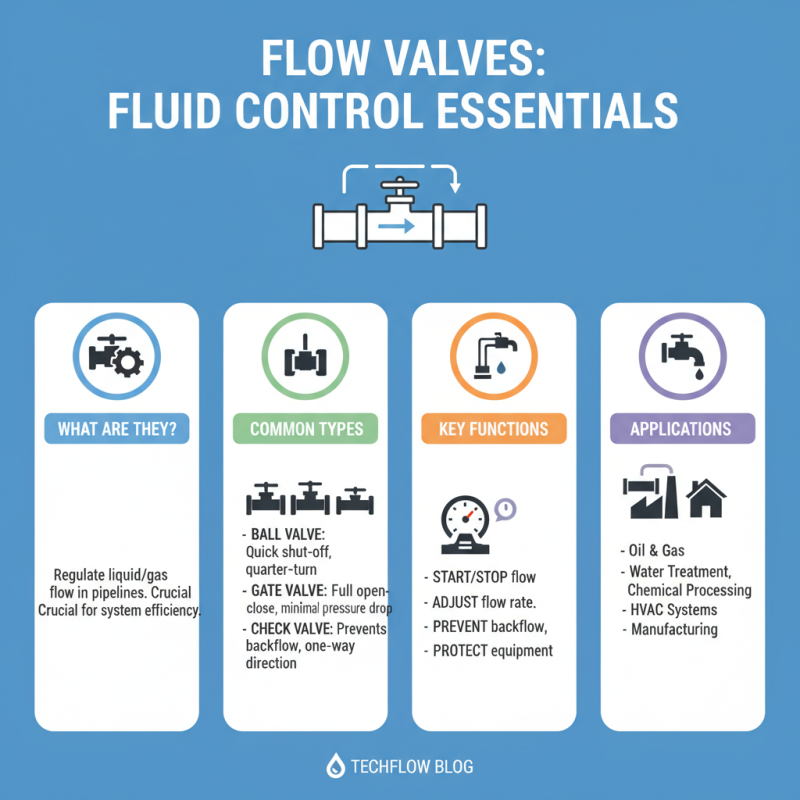
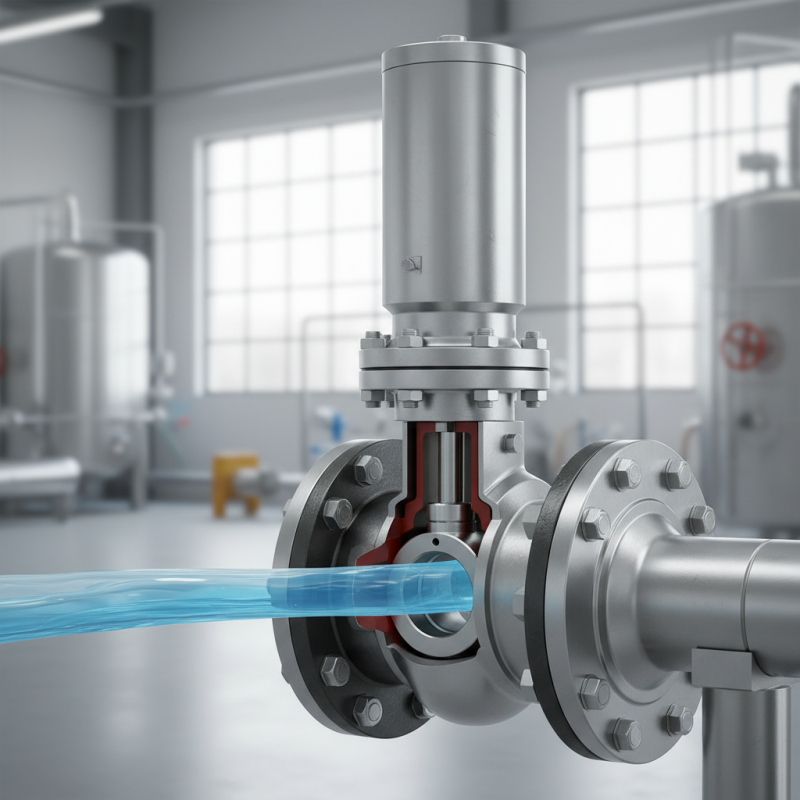
Flow valves play a crucial role in controlling fluid movement in various systems. They regulate the flow of liquids and gases through pipes and tubes. These devices open, close, or partially obstruct flow to maintain desired pressure levels or flow rates. A simple turn or switch can adjust their position, influencing how much fluid passes through.
The mechanisms vary. Some valves use mechanical systems, while others rely on electrical control. A diaphragm valve, for example, has a flexible membrane that can block or allow flow. It’s often used in medical devices and food processing. However, maintaining these valves is essential. A blockage or wear can lead to failures and costly downtime.
Control is critical in many applications, from manufacturing to irrigation. An improperly calibrated valve can cause leaks or inadequate pressure. Users must monitor and adjust settings regularly. It's a balancing act that requires attention to detail. Understanding the actual flow rate is vital. Miscalculations can have serious repercussions. Each system is unique, reflecting the need for careful planning and ongoing assessment.
The Mechanism Behind Flow Valve Operation
Flow valves are critical components in fluid systems. They control the movement of liquids or gases, ensuring the appropriate flow rate. The mechanism behind their operation involves various principles of fluid dynamics. When pressure is applied on one side of the valve, it opens or closes to adjust the flow.
Many industries rely on flow valves for precise control. For instance, a report from the Fluid Control Association indicates that improper valve function can lead to a loss of efficiency, estimated at 25% in some hydraulic systems. Each valve's design influences how fluid flows through it, impacting pressure and speed. Some valves have a simple design, while others are more complex. This complexity can sometimes lead to maintenance challenges.
Different types of flow valves operate on unique principles. Some use mechanical leverage, while others depend on electromagnetic control. The choice of valve affects operational effectiveness. The American Society of Mechanical Engineers emphasizes that selecting the right valve is crucial for system performance. An incorrect selection can hinder fluid movement and increase energy consumption. Understanding these dynamics is key for anyone in the industry.
Importance of Flow Valves in Various Industries
Flow valves play a critical role across various industries. These devices regulate fluid flow, ensuring efficient operations. In manufacturing, flow valves control materials like water and chemicals. This precision is vital for maintaining product quality. For instance, in food processing, even a minor error could compromise safety.
Additionally, flow valves are essential in the oil and gas sector. They help manage the flow of fuels, which can be dangerous. A malfunction may lead to leaks or explosions, emphasizing the need for reliable mechanisms. The importance of regular maintenance is often overlooked here.
In HVAC systems, flow valves aid in temperature regulation. They balance hot and cold air, enhancing comfort in buildings. However, many overlook their maintenance, leading to inefficiencies. The consequences can be costly, affecting energy consumption and indoor air quality. Ignoring this can result in discomfort and higher bills.
What is a flow valve and how does it work? - Importance of Flow Valves in Various Industries
| Industry |
Type of Flow Valve |
Functionality |
Importance |
| Water Treatment |
Ball Valve |
Controls flow of water |
Essential for regulating supply |
| Oil and Gas |
Gate Valve |
Allows full flow or no flow |
Critical for safety and efficiency |
| Manufacturing |
Check Valve |
Prevents backflow |
Ensures product integrity |
| HVAC |
Solenoid Valve |
Controls fluid flow automatically |
Enhances energy efficiency |
| Chemical Processing |
Globe Valve |
Regulates flow rate |
Vital for precise control |