
How to Choose Ball Valves for Global Sourcing?
Choosing ball valves for global sourcing is not simply a price exercise. It is a decision about pressure, media, documentation, delivery, and failure risk.
Grand View Research reported that the global industrial valves market was valued at approximately USD 78 billion in 2023. Its forecast also indicates continued growth through 2030, driven by energy, water, chemical, and manufacturing projects. Fortune Business Insights similarly identifies infrastructure investment and process automation as major market drivers. These figures show opportunity, but they do not guarantee a suitable supplier.
Greg Johnson, a recognized valve-industry specialist and former president of United Valve, has warned, “A valve is only as good as the application it serves.” That practical point matters when comparing ball valves from different regions. A low quotation may exclude testing, coatings, spare seats, actuator sizing, or export packaging.
The sourcing process should begin with service conditions. Record pressure, temperature, fluid chemistry, pipe size, end connections, and operating cycles. Then verify applicable requirements, such as API 6D, API 608, ASME B16.34, ISO 5211, and ISO 15848, where relevant. Ask for material certificates, pressure-test records, fugitive-emission data, and serial-number traceability.
Look beyond the factory brochure.
Audit production controls and inspect machining, assembly, and testing practices. Calculate total landed cost, including freight, duties, inspection, maintenance, and possible downtime. Currency changes can distort comparisons. So can vague lead times.
A careful buyer should also challenge personal assumptions. The cheapest ball valves may perform well. Sometimes. But dependable global sourcing requires evidence, not confident promises.
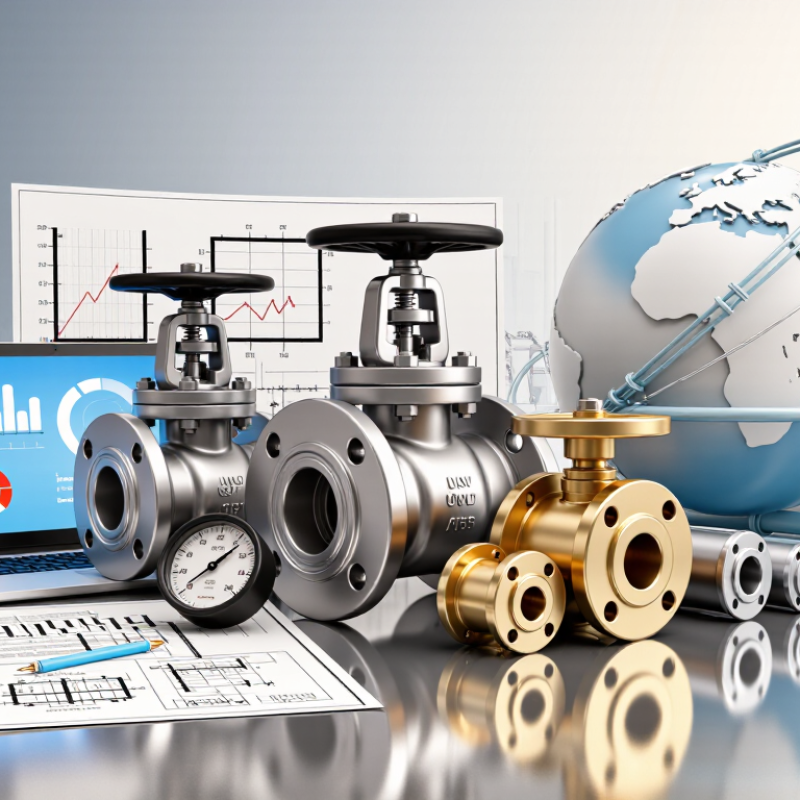
Define Ball Valve Types and Their Operating Principles
When sourcing ball valves globally, begin by defining the valve type and operating principle. A ball valve controls flow with a drilled sphere inside its body. Turning the stem rotates the ball 90 degrees. The bore aligns with the pipeline for full flow, then blocks it when turned across the passage. That quarter-turn matters.
A floating ball valve uses line pressure to push the ball against the downstream seat. It suits many low and medium-pressure services, but seat wear can increase under demanding conditions. A trunnion-mounted ball valve supports the ball with upper and lower stems. This design reduces operating torque and handles larger sizes or higher pressures more effectively. Full-bore valves reduce pressure loss, while reduced-bore valves can lower cost and weight. Three-way valves redirect flow between connected ports.
Body entry also deserves attention. Side-entry construction is common and practical for standard maintenance. Top-entry construction may simplify in-line servicing, although its structure can be heavier. Sealing materials must match temperature, pressure, and the fluid’s chemical properties. Do not select by size alone.
In procurement reviews, I check pressure ratings, end connections, cavity relief, fire-safe requirements, and actuator compatibility. Documentation should include test results, material certificates, and clear inspection criteria. A recurring mistake is treating “stainless steel” as a complete specification. It is not. Alloy grade, trim, seat material, and manufacturing quality can change service life significantly. The best selection may still need revision after actual operating data appears.
How to Choose Ball Valves for Global Sourcing? - Define Ball Valve Types and Their Operating Principles
| Valve Type / Classification | Operating Principle | Typical Flow Path | Main Advantages | Main Limitations | Common Applications | Global Sourcing Checkpoints |
|---|---|---|---|---|---|---|
| Floating Ball Valve | The ball is held between two seats and is not mechanically fixed to the stem. Line pressure pushes the ball against the downstream seat to improve shut-off. | Usually straight-through, quarter-turn isolation. | Simple construction, compact design, lower initial cost, and reliable bubble-tight shut-off when correctly selected. | Seat loading increases with pressure and size; torque can rise under high differential pressure. Very large or high-pressure sizes may be less suitable. | Water, air, gas, general process service, and moderate-pressure liquid systems. | Confirm pressure class, size range, seat material, allowable differential pressure, stem design, and torque data for actuator sizing. |
| Trunnion-Mounted Ball Valve | The ball is supported by a fixed lower trunnion and an upper stem. The seats are energized toward the ball, reducing the operating torque compared with a floating design. | Generally full-bore or reduced-bore, quarter-turn flow control for isolation. | Suitable for large diameters, high pressure, high differential pressure, and automated operation; lower torque is beneficial for actuators. | More components, larger envelope, higher weight, and higher purchase and maintenance cost than many floating designs. | Transmission, pipeline, storage, petrochemical, and high-pressure process isolation. | Request seat design details, cavity-pressure relief method, emergency sealing provisions where required, torque curves, and applicable test documentation. |
| Full-Port Ball Valve | The ball bore is approximately equal to the connected pipe internal diameter, allowing the valve to present minimal restriction when fully open. | Nearly continuous bore through the valve. | Low pressure drop, reduced turbulence, and suitability for pipeline pigging or cleaning tools when the complete system is designed for pigging. | Typically larger, heavier, and more expensive than reduced-port designs; may require more installation space. | Pipeline isolation, slurry-compatible services where suitable, and systems requiring low pressure loss. | Compare actual bore dimensions, end-to-end length, pigging requirements, pressure drop, and compatibility with the pipeline cleaning method. |
| Reduced-Port Ball Valve | The ball bore is smaller than the connected pipe internal diameter, creating a controlled flow restriction when the valve is open. | Reduced internal passage with a quarter-turn ball mechanism. | More compact and economical; often offers lower weight and adequate performance for general isolation duties. | Higher pressure loss than a full-port valve and generally unsuitable for applications requiring unobstructed pigging. | Utility piping, instrument isolation, general industrial service, and applications where pressure drop is acceptable. | Check bore size, calculated pressure drop, velocity limits, connection dimensions, and whether debris could accumulate at the reduced passage. |
| Soft-Seated Ball Valve | Non-metallic seats, commonly made from engineered polymers, create the primary seal against the ball surface. | Straight-through isolation with a quarter-turn rotating ball. | Excellent shut-off for many clean fluids, low operating torque, and good resistance to many forms of corrosion. | Seat temperature and chemical compatibility limits; vulnerable to abrasive particles, severe erosion, and some fire conditions unless specially designed. | Water, air, natural gas, clean chemicals, HVAC, and general process services within the seat rating. | Verify seat compound, temperature range, fluid compatibility, fire-safe requirement, fugitive-emission requirement, and decompression resistance for gas service. |
| Metal-Seated Ball Valve | Metallic seating surfaces, sometimes enhanced with wear-resistant coatings, maintain contact with the ball under demanding conditions. | Straight-through isolation; some designs support specialized severe-service flow paths. | Better resistance to high temperature, abrasion, erosion, and certain solid-bearing or severe process fluids. | Usually higher cost and torque; shut-off may not equal the performance of a soft seat, and surface finish and alignment are critical. | High-temperature service, abrasive media, powder or particle-containing process streams, and severe industrial applications. | Request coating type, hardness, surface finish, allowable leakage class, temperature limits, particle size restrictions, and inspection records. |
| Two-Piece Ball Valve | The valve body is assembled from two primary sections around the ball and seats. The stem rotates the ball by 90 degrees between open and closed positions. | Typically straight-through, full-port or reduced-port. | Cost-effective, compact, and widely available in threaded, flanged, or welded configurations. | Body disassembly may require removing the valve from the line; maintenance access is more limited than with a three-piece design. | General industrial piping, water, air, gas, and process utility systems. | Confirm body joint design, assembly orientation, gasket material, maintenance procedure, end connections, and pressure-temperature rating. |
| Three-Piece Ball Valve | The central body section containing the ball and seats is clamped or bolted between two end sections, allowing the center section to be removed for service. | Usually full-port or reduced-port, quarter-turn isolation. | Easier maintenance, seat replacement, and inspection; suitable for systems where minimizing pipe disassembly is important. | More body fasteners, greater length, and often higher cost than comparable two-piece valves. | Chemical processing, food and beverage utilities, skid systems, water treatment, and frequently serviced equipment. | Check center-section removal clearance, bolt material, gasket design, spare-seat availability, reassembly torque, and line-support requirements. |
| Top-Entry Ball Valve | Internal components are accessed through an opening at the top of the body, generally allowing in-line maintenance after depressurization and isolation. | Commonly full-bore or reduced-bore pipeline isolation. | Can reduce pipe removal during maintenance and is useful where side access is restricted. | Heavier and more complex body construction; requires adequate overhead maintenance clearance. | Pipeline, terminal, storage, and process facilities with planned inspection or seat maintenance. | Confirm top-entry clearance, cover sealing arrangement, lifting provisions, maintenance tooling, pressure-containing body design, and inspection requirements. |
| Side-Entry Ball Valve | The ball and seats are installed through a side or body-end opening, and the body is assembled with bolted or threaded joints depending on the design. | Straight-through quarter-turn flow path. | Well-established construction, broad size availability, and straightforward manufacturing and inspection arrangements. | Maintenance may require removing or shifting the valve, and body-joint integrity must be controlled carefully. | General industrial piping, utility systems, and many standard isolation applications. | Review body-joint sealing, bolt tightening requirements, end-to-end dimensions, installation orientation, and spare-part access. |
| V-Port or Characterized Ball Valve | A V-shaped ball opening produces a more controllable relationship between rotational position and flow rate than a standard spherical bore. | Characterized or throttling flow path rather than simple unrestricted isolation. | Improved modulating control, high rangeability in suitable designs, and better control response than a standard isolation ball valve. | Not automatically suitable for all throttling duties; high-velocity fluid can cause erosion, noise, or cavitation if improperly sized. | Process control, blending, dosing, and flow regulation where the valve design is rated for modulation. | Obtain flow coefficient data, control characteristic, cavitation and noise calculations, actuator sizing, dead-band data, and seat-wear expectations. |
| Manual Ball Valve | A hand lever or gearbox rotates the ball through approximately 90 degrees. The operator positions the ball parallel to the flow for open service and perpendicular for closed service. | Quarter-turn on/off operation. | Simple, fast, economical, and independent of external power or instrument air. | Dependent on operator access and correct positioning; unsuitable for remote operation or continuous throttling unless specifically designed for it. | Utility lines, maintenance isolation, equipment skids, and low-frequency shut-off duties. | Specify handle direction, locking needs, operating torque, access space, visual position indication, and accidental-operation protection. |
| Automated Ball Valve | A pneumatic, electric, or hydraulic actuator converts control energy into quarter-turn stem rotation; control accessories may provide position feedback and fail action. | Remote on/off or modulating operation, depending on the valve and actuator package. | Remote control, repeatable operation, integration with process-control systems, and improved safety in inaccessible areas. | Higher system cost and complexity; incorrect actuator sizing, power loss, or accessory selection can prevent reliable operation. | Process automation, emergency isolation, utility control, and hazardous or remote installations. | Specify operating time, fail-open or fail-closed action, supply conditions, torque margin, duty cycle, enclosure protection, feedback, and hazardous-area requirements. |
Related Posts
-
2026 How to Choose the Right Ball Valves for Your Needs?
-
Top 10 Apollo Ball Valves for Your Next Project?
-
Top 10 Apollo Ball Valves in China for Reliable Performance and Quality?
-
Top Apollo Ball Valves for Optimal Performance and Reliability?
-
How to Choose the Best Ball Valve Manufacturers for Your Needs?
-
Why Choose Apollo Ball Valves for Your Industrial Needs?