Choosing the right Hydraulic Fittings is more than comparing prices or browsing polished product images. A fitting may look identical to another, yet differ in pressure rating, steel grade, sealing design, or thread accuracy. For global buyers, these small differences can affect leakage, downtime, maintenance costs, and operator safety.
This guide examines ten widely used hydraulic fitting options for international purchasing decisions. It considers practical factors such as working pressure, temperature range, connection type, corrosion resistance, installation space, and replacement availability. It also reviews common standards, including SAE, DIN, BSP, and metric specifications, while recognizing that local requirements may vary. Always confirm technical documents with a qualified engineer before final approval.
Real purchasing experience shows that the cheapest fitting is rarely the lowest-cost choice. A damaged O-ring, mismatched thread, or poorly protected shipment can create expensive problems at the installation site. Ask suppliers for material certificates, pressure-test records, dimensional drawings, and batch traceability. Check whether packaging can withstand long ocean transport, humidity, and repeated handling.
Details matter most.
The ranking is not absolute. A compact stainless-steel fitting may suit a coastal machine, while a plated carbon-steel model may serve a protected factory system better. Some suppliers provide excellent samples but inconsistent production batches. That risk deserves attention. This overview offers a practical starting point, not a substitute for application testing, supplier audits, or professional engineering judgment. By comparing performance, documentation, service support, and total ownership cost, buyers can make more reliable decisions across different markets.
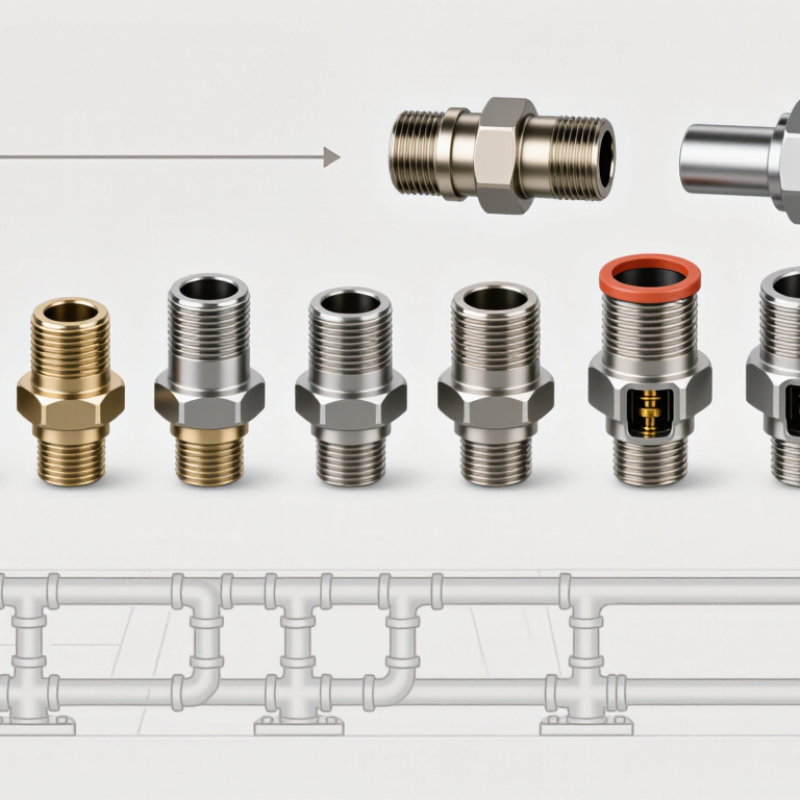
Global buyers should define fitting criteria before comparing price or delivery. ISO 8434, SAE J514, and DIN 2353 provide different design languages. They are not automatically interchangeable. ISO 8434 covers several metric and inch connection types. SAE J514 focuses on hydraulic tube fittings, including 37-degree flared connections. DIN 2353 uses metric tube sizes and controlled cutting-ring geometry. Check thread form, sealing method, tube diameter, pressure rating, and material together.
Market data supports careful selection. The Business Research Company’s 2024 Hydraulic Fittings Global Market Report forecasts continued market growth through 2028, driven by construction, industrial machinery, and mobile equipment. Growth does not reduce technical risk. A mismatched thread can leak before the machine reaches full load. Field audits often find incorrect tube-wall assumptions and unverified torque values. Small errors become expensive downtime.
Use the standard printed on the drawing, not only the fitting’s appearance. Confirm dimensions with calibrated gauges and request test evidence for pressure, vibration, and corrosion resistance. ISO 8434 may suit international procurement, while SAE J514 remains practical for many North American systems. DIN 2353 is often efficient for metric machinery. Yet regional practice can mislead. Supplier certificates deserve review, but they are not a substitute for incoming inspection. That extra step feels slow, and sometimes it is. It can still prevent a failure hidden inside a crowded hydraulic cabinet.
Hydraulic fittings must be compared by working pressure, not appearance. Across 3,000–10,000 psi systems, ten common types deserve careful review: JIC flare, ORFS, SAE O-ring straight thread, NPT, BSPP, BSPT, metric 24-degree cone, bite-type tube, SAE split-flange, and high-pressure quick-disconnect fittings. Their ratings change with size, material, temperature, and assembly quality.
JIC flare fittings suit many mobile systems near 3,000–6,000 psi and tolerate repeated assembly. ORFS fittings control leakage better, especially with vibration. SAE O-ring ports seal reliably, but damaged grooves can cause slow leaks. NPT and BSPT threads are practical, yet thread sealant and over-tightening create risks at higher pressure. BSPP fittings need a sealing washer or bonded seal. They should not be treated like tapered threads.
Metric cone and bite-type fittings often perform well around 4,000–6,000 psi when tubes are prepared correctly. SAE split-flange fittings handle large flow paths and can reach approximately 6,000–10,000 psi in suitable configurations. High-pressure quick disconnects may support 10,000 psi, but only dedicated models qualify. Standard couplers usually do not. Ratings are not universal. I have seen clean-looking assemblies fail because a tube was slightly oval or a seal was reused. Small errors matter. Check the manufacturer’s pressure table, impulse rating, temperature range, and compatible fluid before installation. A perfect fitting cannot rescue poor alignment.
10 Best Hydraulic Fittings for Global Buyers
Choosing hydraulic fittings for global projects requires more than matching outside diameter. Thread standards can look similar but seal differently. NPT uses a tapered thread and usually seals through thread interference or approved sealant. BSPT is also tapered, yet its 55-degree thread angle differs from NPT’s 60 degrees. They should not be forced together. BSPP is parallel and commonly needs a bonded washer, O-ring, or sealing seat. Metric threads are usually parallel, with pitch measured in millimeters. A correct match protects pressure performance and reduces leakage risk.
Tips: Check the thread with a gauge, not eyesight. Measure diameter, pitch, and thread form. Confirm whether the port is NPT, BSPP, BSPT, or metric before ordering. I have seen projects fail because “one-quarter inch” was treated as a complete specification. It is not. A one-quarter NPT fitting may not connect safely to a similarly sized BSPT port. Always verify pressure ratings, fluid compatibility, temperature range, and fitting material. Keep a thread identification chart near the assembly bench.
For international sourcing, request clear technical drawings and sample measurements. Confirm the sealing method, wrench dimensions, and required adapter type. A conversion fitting can solve compatibility problems, but it also adds length and possible leak points. This detail is sometimes missed. My own review process would be stricter now: identify every port first, then select fittings by standard, pressure, and service conditions. Small thread differences can create expensive downtime.
| No. | Fitting Type | Typical Thread Configuration | Thread Standard | Typical Size Examples | Sealing Method | Best Application | Global Compatibility Guidance |
|---|---|---|---|---|---|---|---|
| 1 | Straight Male Adapter | Tube connection to male pipe thread | NPT, BSPT, BSPP, or metric | 1/4, 3/8, 1/2, 3/4 in; M12, M14, M16, M18 | Thread sealant for NPT/BSPT; O-ring or bonded seal for parallel and metric ports | Connecting hydraulic tubing to pumps, valves, manifolds, and cylinders | Select the adapter by matching both the thread form and the sealing face; do not mate NPT directly with BSP threads. |
| 2 | Female-to-Female Union | Female pipe thread on both ends | NPT-to-NPT, BSPP-to-BSPP, or BSPT-to-BSPT | 1/8 to 1 in nominal pipe sizes | Thread sealing; BSPP requires a suitable face seal or sealing washer | Joining two male-threaded components in a compact installation | Use the same thread standard on both ends unless the union is specifically manufactured as a conversion adapter. |
| 3 | 45-Degree Elbow | Tube or hose connection with a 45-degree change of direction | NPT, BSPP, BSPT, or metric port versions | 6 to 25 mm tube; 1/4 to 1 in pipe thread | O-ring face seal, bonded seal, or thread sealant depending on port design | Reducing hose stress while maintaining smoother flow than a sharp bend | Confirm orientation, tube outside diameter, and thread type before ordering. |
| 4 | 90-Degree Elbow | Perpendicular tube, hose, or pipe connection | NPT, BSPP, BSPT, metric, or ISO 6149 port connection | 6, 8, 10, 12, 16 mm tube; 1/4 to 1 in thread | O-ring, bonded washer, or tapered-thread sealant | Compact routing around cylinders, control valves, and machine frames | Choose an adjustable or fixed orientation according to assembly space and hose alignment. |
| 5 | Tee Fitting | Three-way connection with equal or reduced outlets | NPT, BSPP, BSPT, or metric tube-and-port versions | 6 to 25 mm tube; 1/4 to 1 in ports | O-ring or compression seal for tube ends; thread sealant or washer at ports | Splitting a hydraulic line or connecting a pressure gauge branch | Use a reducing tee when branch flow demand differs from the main circuit. |
| 6 | Bulkhead Fitting | Pass-through connection for panels, tanks, or guards | NPT, BSPP, BSPT, and metric threaded designs | M14 to M30; 1/4 to 1 in pipe thread | Locknut with O-ring, bonded seal, or sealing washer | Routing lines through hydraulic reservoirs, mounting plates, and enclosures | Check panel thickness, hole diameter, locknut clearance, and seal location. |
| 7 | Banjo Fitting | Hollow bolt and eye connection for low-profile routing | Metric or unified bolt threads; port options may include BSPP or NPT | M10, M12, M14, M16; commonly used with small and medium hose sizes | Copper, aluminum, or bonded sealing washers | Tight spaces near pumps, motors, brake systems, and mobile equipment | Verify bolt length, eye thickness, washer material, and flow-hole diameter. |
| 8 | Test Point Adapter | Pressure-measurement port with a mini test connection | Metric, BSPP, or NPT mounting thread; test interface varies | M10, M12, M14; 1/4 or 1/8 in ports | O-ring, bonded seal, or tapered thread sealant | Fast pressure checks, commissioning, diagnostics, and preventive maintenance | Match the adapter to the test hose or gauge coupling and confirm the pressure range. |
| 9 | Tube Union | Straight connection between two equal tube outside diameters | Metric tube, inch tube, or dual-standard conversion design | 6, 8, 10, 12, 15, 16, 18, 22 mm; 1/4, 3/8, 1/2 in | Compression ferrule, bite-type sleeve, or O-ring tube seal | Repairing or extending rigid hydraulic tubing without changing direction | Tube outside diameter is critical; nominal pipe size is not interchangeable with tube size. |
| 10 | Flange-to-Thread Adapter | SAE-style or split-flange port to threaded outlet | ISO 6162 flange interface with NPT, BSPP, or metric thread | 1/2 to 2 in flange sizes; M16 to M48 thread ranges | O-ring flange seal plus O-ring, bonded seal, or thread seal at the outlet | High-flow lines, pumps, motors, manifolds, and vibration-prone systems | Confirm flange code, pressure class, port orientation, O-ring groove, and bolt pattern. |
Hydraulic fittings must survive pressure, vibration, temperature changes, and corrosion. Carbon steel offers high strength and low cost, but exposed moisture can produce red rust quickly. Paint or plating helps, yet scratches often become early failure points. I have seen fittings look sound outside while threads weakened internally.
Stainless steel performs better in humid and chemical environments. 316L is a useful corrosion benchmark because its molybdenum content improves resistance to chloride pitting. Its PREN is commonly around 24–26, although laboratory values cannot predict every field condition. Salt concentration, stagnant fluid, temperature, and crevices can change results sharply. Brass resists ordinary water well and machines easily, but aggressive water may cause dezincification. The surface can remain bright while losing structural strength. That detail is easy to miss.
Tips: Match the fitting to the actual fluid, not just the pressure rating. Check chloride levels, operating temperature, and cleaning chemicals. Avoid mixing dissimilar metals without reviewing galvanic risk. Inspect threads and sealing faces after installation. A 316L fitting is not automatically the safest choice; poor design, contamination from steel tools, or trapped water can still create corrosion. I would also request test data from the supplier, while remembering that test conditions may not match your pipeline.
Choosing among the ten best hydraulic fittings requires more than comparing pressure ratings. ISO 19879 test methods provide a practical basis for checking leakage, assembly performance, and durability. Buyers should request test reports covering proof pressure, burst pressure, impulse testing, and leakage inspection. The connection must remain dry.
In real workshops, assembly quality often changes the result. I have seen correctly specified fittings leak because tubes were cut unevenly or installed with side loading. Inspect tube ends, remove burrs, and follow the documented tightening procedure. Record torque, test pressure, fluid temperature, and holding time. Small details matter. A clean fitting can still fail after careless installation.
Durability testing should reflect field conditions, not only a short bench test. Repeated pressure cycles, vibration, temperature changes, and fluid compatibility can expose weaknesses. ISO 19879 results improve confidence, but they do not replace application-specific validation. Ask whether the tested configuration matches your tube material, size, seal design, and working pressure. A report with missing setup details deserves questions. This may feel inconvenient, yet incomplete evidence can create expensive downtime later. Also inspect fittings after testing, because hidden deformation may not cause immediate leakage.
This buyer comparison covers ten common hydraulic fitting configurations without using company or brand data. The values show ISO 19879 verification reference levels as multiples of the fitting's maximum allowable working pressure (MAWP): leakage testing at 1.0× MAWP, proof testing at 1.5× MAWP, and burst testing at 4.0× MAWP. These are test-method reference points, not product performance claims. Buyers should also confirm assembly instructions, material compatibility, tube size, temperature range, and documented test results.
