
2026 Best Li Ion Battery Components for Global Buyers?
Choosing the right Li Ion Battery Components is central to safe, efficient, and reliable battery production in 2026. Global buyers must evaluate more than cell price or supplier promises. Cathode and anode materials, separators, electrolytes, current collectors, housings, tabs, protection circuits, and battery management systems all influence final performance. Small differences matter.
A practical sourcing review should examine energy density, cycle life, thermal behavior, dimensional accuracy, and traceability. Suppliers should provide consistent technical data, inspection records, safety test results, and clear production controls. Applicable transport, environmental, and product standards also require careful verification for each target market. A component that performs well in a laboratory may behave differently during vibration, humidity, heat, or fast charging.
Experience shows that communication can be as important as chemistry. Buyers should confirm drawings, tolerances, sampling procedures, change-control policies, and warranty responsibilities before placing large orders. Ask for representative samples. Test them independently. No checklist is perfect. Some recommendations may favor established materials too strongly, while newer designs could offer useful gains. That uncertainty deserves honest review.
This guide compares leading Li Ion Battery Components for global purchasing decisions. It focuses on technical suitability, supplier reliability, quality evidence, and long-term value. Readers will find practical questions for comparing manufacturers, reducing avoidable risks, and building more dependable battery packs. Prices matter, but poor consistency can cost far more. Reliability remains the real benchmark.
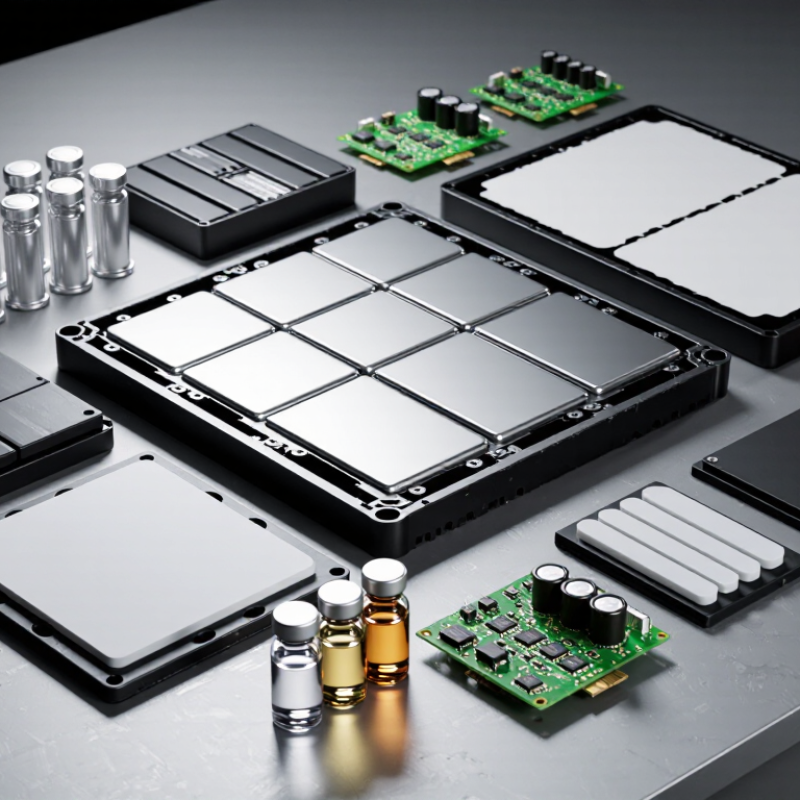
Li-Ion Battery Components: Roles, Materials, and Core Functions
A lithium-ion battery is not one material; it is a coordinated stack of functional components. The cathode stores and releases lithium ions, while its chemistry shapes voltage, energy density, cost, and thermal behavior. Common active materials include lithium iron phosphate and nickel-manganese-cobalt oxides. The anode commonly uses graphite, although silicon blends can increase capacity. The separator is a thin porous polymer film. It prevents contact. The electrolyte carries ions between electrodes, while additives influence cycle life and safety.
Copper foil collects current at the anode; aluminum foil performs that role at the cathode. Tabs, welds, seals, and the casing must handle heat, vibration, and expansion. A battery management system monitors voltage, temperature, and current. It also balances cells and limits unsafe operating conditions. Small failures matter. A damaged separator or weak weld can reduce reliability long before a capacity test reveals it. During supplier evaluations, request material certificates, thickness tolerances, moisture controls, and sample test data.
Global buyers should match components to cell format, production method, climate, and transport conditions. For example, a humid factory needs stricter drying controls before electrolyte filling. A cold-weather application may require different electrolyte performance and heating logic. Price alone is a poor filter. Traceability matters. Specifications can still look complete and be wrong. Recheck energy claims against measured cell data, not marketing estimates. Also review applicable safety, transport, and recycling requirements before approving a supplier.
| Component | Category | Common Materials | Primary Role | Core Function | Key Technical Considerations for Buyers | Typical Cell Location or Form |
|---|---|---|---|---|---|---|
| Cathode | Electrode | Lithium nickel manganese cobalt oxide (NMC), lithium iron phosphate (LFP), lithium cobalt oxide (LCO), lithium nickel cobalt aluminum oxide (NCA) | Acts as the positive electrode during discharge. | Stores and releases lithium ions while contributing substantially to cell voltage, energy density, safety profile, and cost. | Compare chemistry-specific energy density, thermal stability, cycle life, operating voltage, raw-material exposure, and application suitability. | Coated as an active-material layer on a metal current collector. |
| Anode | Electrode | Graphite, silicon-graphite blends, lithium titanate (LTO) in specialized cells | Acts as the negative electrode during discharge. | Accepts and releases lithium ions and influences charging speed, cycle life, low-temperature performance, and cell capacity. | Evaluate reversible capacity, first-cycle efficiency, fast-charge capability, swelling behavior, safety, and compatibility with the selected cathode. | Coated as an active-material layer on a metal current collector. |
| Separator | Safety & Ion Transport | Microporous polyethylene (PE), polypropylene (PP), multilayer polyolefin films, ceramic-coated polymer films | Physically separates the cathode and anode. | Prevents internal short circuits while allowing lithium-ion transport through absorbed electrolyte. | Check thickness, porosity, puncture strength, shutdown behavior, dimensional stability, coating uniformity, and compatibility with the electrolyte. | Thin porous film placed between the two electrodes. |
| Electrolyte | Ion-Conducting Medium | Organic carbonate solvents such as ethylene carbonate and linear carbonates, plus a lithium salt such as LiPF6 and performance additives | Provides the medium through which lithium ions move between the electrodes. | Enables ionic conductivity and supports formation of protective interphase layers on the electrode surfaces. | Assess ionic conductivity, voltage stability, flammability, gas generation, low-temperature behavior, moisture sensitivity, and additive package. | Fills the pores of the electrodes and separator inside the sealed cell. |
| Cathode Current Collector | Electrical Conduction | Aluminum foil, commonly used in lithium-ion cathodes | Collects current from the cathode coating and transfers it to the external terminal. | Provides a low-resistance electrical pathway and mechanical support for the cathode coating. | Review foil thickness, tensile strength, surface treatment, corrosion resistance, coating adhesion, flatness, and cleanliness. | Metal foil beneath the cathode active-material coating. |
| Anode Current Collector | Electrical Conduction | Copper foil, commonly used in graphite-based lithium-ion anodes | Collects current from the anode coating and transfers it to the external terminal. | Provides electrical conductivity and structural support for the anode coating. | Evaluate foil thickness, elongation, tensile strength, surface roughness, oxidation control, burr limits, and coating adhesion. | Metal foil beneath the anode active-material coating. |
| Conductive Additive | Electrode Support | Carbon black, graphite, carbon nanotubes, graphene, or combinations of conductive carbons | Improves electronic conductivity within the electrode coating. | Creates conductive pathways between active-material particles and the current collector, reducing internal resistance. | Balance conductivity improvement against cost, dispersion requirements, tap density, processing complexity, and electrode energy-density impact. | Dispersed throughout the cathode or anode coating. |
| Binder | Electrode Support | Polyvinylidene fluoride (PVDF), carboxymethyl cellulose (CMC), styrene-butadiene rubber (SBR), or water-based specialty binders | Holds active-material and conductive particles together and anchors them to the current collector. | Provides mechanical integrity, coating adhesion, and resistance to cracking or particle loss during cycling. | Consider adhesion, chemical stability, solvent or water processing, drying conditions, flexibility, and influence on electrode resistance. | Polymer phase distributed within the electrode coating. |
| Electrode Coating | Manufactured Layer | Active material, conductive additive, binder, and residual-controlled processing medium | Forms the electrochemically active layers on the current collectors. | Determines areal capacity, power capability, energy density, and much of the cell's manufacturability. | Control loading, thickness, density, porosity, moisture, particle distribution, edge quality, and coating uniformity. | Single- or double-sided coating on aluminum or copper foil. |
| Cell Housing | Mechanical Protection | Aluminum or steel can for cylindrical and prismatic cells; aluminum-laminated polymer pouch film for pouch cells | Encloses the electrochemical stack and protects it from mechanical and environmental damage. | Maintains cell integrity, supports heat transfer, and provides containment for electrolyte and generated gases. | Check sealing reliability, corrosion resistance, dimensional tolerances, pressure resistance, weight, thermal behavior, and format compatibility. | Cylindrical, prismatic, or pouch-cell enclosure. |
| Tabs and Terminals | External Connection | Aluminum and nickel-plated or nickel-based conductive metals, depending on electrode polarity and cell design | Connects the internal electrode current collectors to the external electrical circuit. | Transfers charge and discharge current while maintaining a reliable low-resistance connection. | Review current-carrying capacity, weldability, contact resistance, heat generation, corrosion resistance, and insulation from the opposite polarity. | Welded to current collectors and routed through or integrated with the cell housing. |
| Sealing and Insulation Parts | Safety & Protection | Polymer gaskets, insulating films, electrical tapes, ceramic or polymer protection layers | Prevents electrolyte leakage and unintended electrical contact. | Maintains isolation between conductive parts and preserves the cell's hermetic or controlled seal. | Assess dielectric strength, chemical compatibility, temperature resistance, compression set, seal quality, and dimensional stability. | Located around terminals, tabs, covers, edges, and internal conductive surfaces. |
| Current Interrupt Device and Vent | Abuse Protection | Engineered metal rupture elements, pressure-sensitive structures, and insulating components | Helps limit hazardous pressure or current conditions in selected cell designs. | Interrupts current or releases pressure when defined abnormal conditions occur, reducing the risk of catastrophic cell failure. | Verify activation thresholds, repeatability, gas-flow path, sealing performance, vent direction, and compliance with applicable safety tests. | Usually integrated into the cap or cover assembly of applicable cells. |
| Battery Management System (BMS) | Pack Electronics | Voltage and temperature sensors, current-sensing elements, control electronics, switching devices, communication hardware, and firmware | Monitors and manages cells or modules in a battery pack. | Supports overcharge, over-discharge, overcurrent, short-circuit, and thermal protection; may also perform balancing and state estimation. | Evaluate sensing accuracy, balancing method, response time, operating temperature, communication protocol, functional safety, cybersecurity, and serviceability. | Installed at cell, module, or pack level rather than inside the electrochemical cell. |
| Thermal Management Materials | Pack Thermal Control | Thermal interface materials, cooling plates, heat spreaders, insulating barriers, and phase-change or liquid-cooling elements | Controls heat generated during charging, discharging, and abnormal events. | Transfers heat away from cells, reduces temperature variation, and can help slow thermal propagation between neighboring cells. | Compare thermal conductivity, electrical insulation, contact resistance, compression behavior, flammability, coolant compatibility, weight, and service life. | Placed between cells, modules, cooling surfaces, and pack structures. |